
Human-Centered Design and the Trends Reshaping Product Development in 2026
Jun 26, 2026 | 2 min read

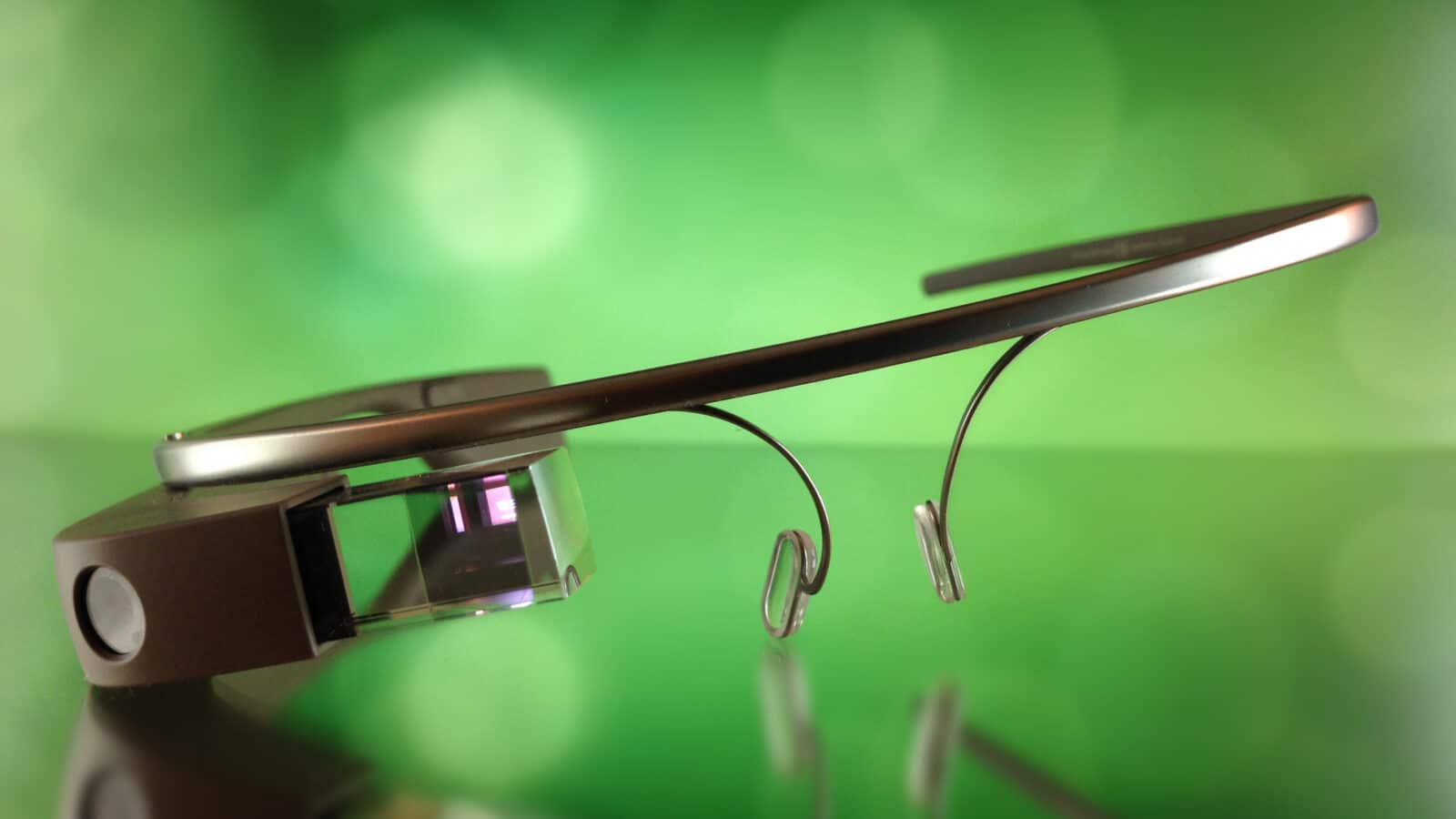
In 2013, Google Glass launched to significant fanfare and failed almost immediately. The developers had prioritized what the technology could do over what users actually wanted from it. The result was a product that was technically impressive and practically awkward — intrusive in social settings, expensive, and disconnected from how people actually lived.
That story hasn’t gotten less relevant. If anything, the pace of new technology entering product development has made the lesson more urgent. AI tools, generative design software, digital twins, and AR/VR are genuinely changing what’s possible — and the risk of letting technology lead the design process rather than the user’s need is higher than it’s ever been.
The CEO of Jaguar put it well: “If you think good design is expensive, you should look at the cost of bad design.” That’s as true for a consumer product as it is for a piece of industrial equipment.
This article reviews the principles and process of human-centered design, and covers the key trends that are shaping product development right now — what’s genuinely useful, what’s still finding its footing, and how to stay oriented around what matters most: building things that work for the people who use them.
Understanding Human-Centered Design
Human-centered design (HCD) is a design philosophy that puts the needs, behaviors, and context of end-users at the center of every stage of product development. It’s not a new idea — the approach has been foundational to good product design since the late 1950s. What makes it worth revisiting is that as new tools and pressures enter the process, the tendency to drift away from the user’s actual experience and toward what’s technically interesting (or expedient) is real.
Key Principles of HCD
- Empathize. Understand users deeply — their needs, frustrations, environment, and workarounds. This is more than user surveys. It requires observation, conversation, and genuine curiosity about how people experience the problem you’re trying to solve.
- Solve the right problem. Most product failures aren’t execution failures. They’re definition failures — the team built a good solution to the wrong problem. HCD insists on understanding root causes before committing to solutions.
- Iterate based on evidence. Assumptions get tested early and often through prototyping, testing, and feedback. The goal is to fail cheaply and learn quickly, not to get it right on the first pass.
Key Benefits of HCD
- Improved user satisfaction. Products built around real user needs meet expectations more consistently.
- Reduced development rework. Catching misalignment early is far cheaper than discovering it post-launch.
- More durable innovation. Solutions grounded in genuine user insight tend to hold up better over time than those built around novelty.
The Human-Centered Design Process
HCD is iterative by nature. It typically moves through five phases, with user feedback running throughout rather than concentrated at the end.
- Research and Empathy. User interviews, field observation, focus groups, journey mapping. The goal is to understand the user’s world, not just their stated preferences.
- Problem Definition. Synthesize research into a clear, actionable problem statement. This step is where most teams underinvest — getting crisp on the right problem is what makes everything downstream more efficient.
- Ideation and Concept Development. Brainstorming, sketching, rapid concept generation. At this stage, quantity matters — you want a wide range of ideas before narrowing down.
- Prototyping. Build looks-like and works-like representations quickly. The goal isn’t polish; it’s learning. What does the user do when they encounter this for the first time?
- Testing and Iteration. Usability testing, structured feedback, refinement. Continue iterating until the design works for the user and meets engineering, manufacturing, and business requirements.

A recent example worth noting: the Samsung Galaxy Ring (launched 2024) succeeded where earlier wearables struggled by focusing obsessively on what users actually wanted from health tracking: passive data collection that didn’t require active engagement, a form factor that felt like jewelry rather than technology, and battery life long enough to stop being a conscious maintenance task. The product decisions followed from user insight, not from showcasing what the sensor technology could do.
Key Trends in Product Development in 2026
Several trends are meaningfully changing how product development teams work. The common thread across the most impactful ones: they accelerate the HCD process when used well, and undermine it when used as a shortcut to skip user understanding.
1. AI as a Design and Development Partner
The AI landscape has shifted substantially since 2024. What was once a set of specialized point tools has become embedded across the product development workflow — in CAD software, simulation platforms, research synthesis, and design ideation. A few areas where this is making a practical difference:
- Generative design. AI-assisted generative design tools (now standard in Fusion, NX, and similar platforms) can rapidly explore the design space for a given set of constraints — weight, load paths, material, manufacturing process. Engineers still make the judgment calls, but the exploration phase is dramatically faster.
- AI-accelerated simulation. Simulation workflows that previously required hours of compute time can now be approximated in minutes using AI surrogate models. This changes the economics of simulation-driven design — teams can run more iterations earlier, when changes are cheaper.
- Research synthesis. Generative AI tools are increasingly used to synthesize user research, surface patterns across interview transcripts, and identify themes in large data sets. This doesn’t replace the judgment involved in interpreting user insight, but it compresses the time from raw data to usable findings.
- Predictive performance modeling. AI models trained on historical product performance data can flag potential failure modes earlier in the design process — before physical prototyping — which reduces costly late-stage redesigns.
The honest caveat: AI tools accelerate the mechanics of design but don’t improve the quality of the problem definition. If a team hasn’t done the user research to understand what they’re actually solving for, AI will help them build the wrong thing faster.
2. Sustainable Product Design
Sustainability has moved from a differentiator to an expectation in most product categories, driven by a combination of regulatory pressure, customer demand, and supply chain resilience concerns. Product developers are increasingly designing for the full lifecycle — not just the use phase, but end-of-life recovery, repairability, and material circularity.
In regulated industries like medical devices, sustainability considerations are now intersecting with compliance — material restrictions, packaging requirements, and carbon reporting obligations are creating new design constraints that need to be incorporated early. Teams that treat sustainability as a late-stage checklist are finding it expensive to retrofit.
3. Digital Prototyping and Digital Twins
Digital twins — virtual replicas of physical products or processes — have become more accessible and more capable. Teams are now using them not just to validate designs before physical builds, but to run ongoing optimization after launch, identify performance degradation in fielded products, and accelerate regulatory submissions with simulation evidence.
The combination of AI-assisted simulation and digital twin models is particularly powerful: teams can explore design variations at scale virtually, using the twin to predict real-world behavior, before committing to physical prototypes. This doesn’t eliminate the need for physical validation — especially in regulated industries — but it significantly changes when in the process that validation happens and how many iterations it takes to get there.
4. AR/VR in Design Review and User Testing

AR and VR tools have found their footing in product development, particularly for design reviews and user testing. The ability to put a stakeholder inside a 1:1 virtual representation of a product before a physical prototype exists changes the quality of feedback teams can get early. Ergonomics issues, clearance problems, and usability concerns that are easy to miss in a 2D CAD view become apparent quickly in an immersive context.
Mixed reality tools (overlaying digital content on physical environments) are also being used to support manufacturing readiness reviews — giving production teams a clearer picture of what assembly will look like before tooling is committed.
5. Distributed Team Collaboration
Cross-functional product development teams are now routinely distributed — across time zones, companies, and disciplines. The tooling to support this has continued to mature. A few categories that have become standard infrastructure for distributed development teams:
- Product lifecycle management (PLM) platforms: Unified environments for managing design data, change history, and cross-functional collaboration across the product lifecycle.
- Cloud-based CAD and simulation: Platforms like Onshape and cloud-hosted NX/Creo allow real-time collaboration on design files without version conflicts, reducing one of the persistent friction points in distributed engineering.
- Visual collaboration tools: Miro, Figma, and similar platforms have become standard for distributed ideation, design reviews, and research synthesis sessions.
- Structured communication platforms: Slack, Teams, and purpose-built engineering communication tools — the challenge for most teams now isn’t access to tools, but developing the discipline to use them consistently enough that distributed teams maintain shared context.
6. Connected Products and Post-Launch Learning
The line between product development and product operations has blurred for connected products. IoT-enabled devices generate real-world performance data continuously — which means product teams now have access to how their products actually perform in the field, not just how they performed in controlled validation.
Forward-looking teams are designing this feedback loop intentionally from the start — instrumenting products to collect the data that will inform the next generation. This is particularly valuable in markets where use patterns are hard to predict accurately at the design stage, and where post-launch iterations can be delivered via software updates without requiring hardware changes.
Staying Oriented in a Rapidly Changing Landscape
The trends above are real, and ignoring them is a legitimate competitive disadvantage. But they’re most valuable as amplifiers of good design practice — not replacements for it. AI makes iteration faster, but it doesn’t replace the need to understand what you’re iterating toward. Digital twins enable better virtual testing, but they don’t replace the judgment that decides what to test for.
The product developers we work with who consistently deliver strong outcomes are the ones who stay close to their users, use new tools to sharpen their process rather than shortcut it, and build cross-functional teams that can hold both the technical and the human dimensions of a problem at the same time.
That’s what we mean when we talk about end-to-end product development at DISHER — not just engineering capability, but the process discipline to build things that work for the people who use them, from concept to production.
Want to talk through how your product development process could be stronger? Start a conversation with our team.
Written By:

Devin Brown
Automation Engineer
DISHER Newsletter
Sign up to receive articles and insights, delivered monthly.
Schedule a no-committment project call
Reach out to discuss your project to find out if DISHER could be a good fit for you.