
5 Ways to Recruit Participants for User Interviews and Testing
Mar 23, 2026 | 2 min read

Great innovation and product development start with understanding your users and their needs.听One of our听top听recommended first听steps for any听company developing听new products is to talk to their users.听But finding the right people to talk to is often the hardest part鈥攁nd one of the biggest reasons teams skip research altogether.听
At 麻豆传媒AV在线看, we partner with our customers to help them connect with their target users and gather insights around real pain points and top features. The result gives them clearer insights, fewer unknowns, and the confidence to move forward.
View a UX research study we did for a leading OEM >>
Here鈥檚 how you can take steps to talk with users to also find those impactful insights.
Before You Begin
Use a screener application survey to filter potential interview candidates
To make sure you are getting legit participants and talking to the right people, you must first create a screener application survey.
A screener survey is a 鈥減re-survey鈥� conducted prior to your study where recruited participants can fill it out and apply to be part of the study. A screener ensures that you get a good variety of participants and confirms they are the right fit for the study.
Typically, screeners will ask for information like:
- General demographics听
- Targeted questions that听help you听know if they are in your target market听
- Contact听information, so you can听reach out to them if you want to invite them to听participate听in your study听
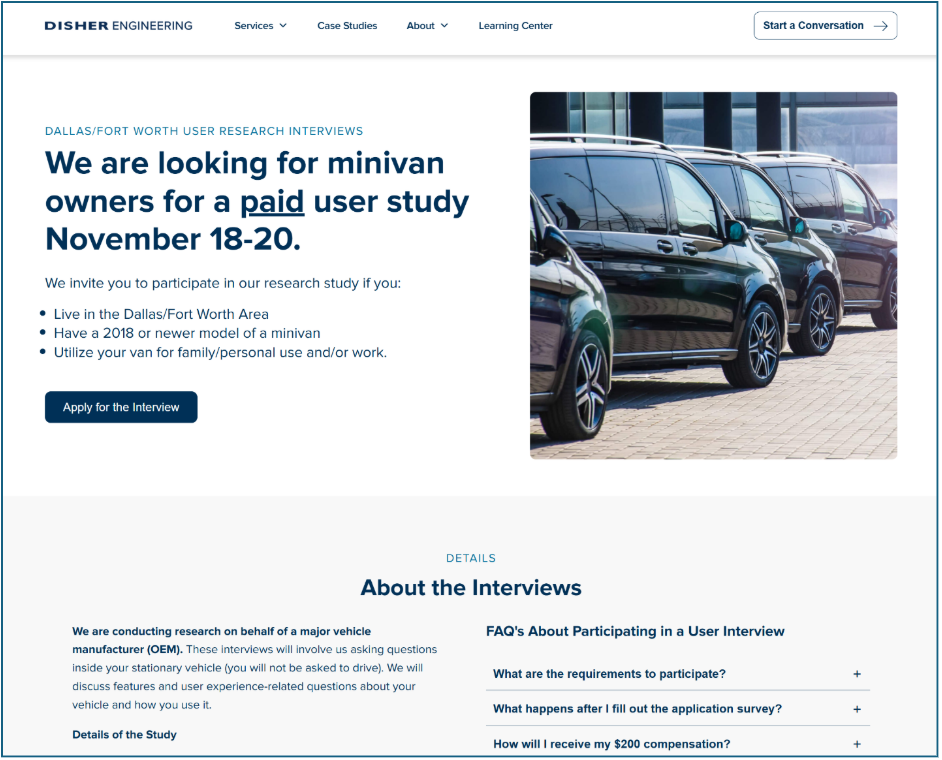
Create a landing page to share information and build trust
When recruiting research participants, it’s important to establish credibility right away, especially if you’re asking people to participate in person. A clear, professional landing page helps potential participants evaluate your study and your company on their own terms, reducing any hesitation they might have about responding to an outreach message.
This is especially helpful when cold recruiting, where participants have no prior relationship with you and need a reason to trust that your study is genuine.
On our recruiting landing pages, we typically include:
- The study name听
- Date, location, and timing details听
- A description of what participants will be expected to do听
- Frequently听asked听questions听
- The incentive amount听for participating听
- A link to apply via the screener survey听
- A short “麻豆传媒AV在线看” section for our company, along with photos from past studies to build familiarity and trust听
By giving potential听participants听a place to do their own research before applying, you reduce friction, build confidence, and increase the likelihood that the right people will engage with your study.听
5 Ways to Recruit Participants for User Studies
Once you have a听screener survey and a landing page听set up听to help share information,听you鈥檙e听ready to start recruiting!听
1. Social Media Postings and Ads
One of the first ways that you can recruit participants is through social media. There are many audience-targeting options through social media ads, allowing you to get specific with who you want your ad to reach and find your target audience quickly.
In one recent study, we used this method to recruit participants for interviews at our office. Facebook and Instagram ads allowed us to target only a small local area, which helped us get great qualified participants who didn鈥檛 have to drive far to participate.
Pros: Very specific targeting, especially if you are looking for people in a certain location or with specific interests.
Cons: Ads can be expensive to run and maintain. It can also be a bit confusing and time-intensive to set up correctly.
2. Online Communities and Groups
Another way you can use social media to recruit for studies is to connect with different communities and groups online.
LinkedIn groups, Reddit threads, Facebook groups, Slack communities, and Discord servers all have hundreds of thousands of niche audiences. From competitive jigsaw puzzlers to jeep enthusiasts, to concrete professionals, if you鈥檙e looking for a specific interest group, you can probably find it online.
Pros:听There are听hundreds of thousands听of niche听communities,听and听you might find听the听jackpot听in听connecting with the right user group you are looking for.听听
Cons:听The one听challenge听you may find听is that听many of these听groups听have community rules that you need to check to see if they allow you to听post and听recruit听in their group page or thread.听A听recruiting post could听be considered听soliciting.听听
3. Professional Recruitment Panels or Platforms
Another successful way we have recruited participants for听user research听is through online services that听have their own panels of participants that you can recruit through. Services听like听,听,听and听听are all different companies that provide this service.听听
Pros: Pre-screened participants, built-in messaging, scheduling tools, and screener surveys can make the management of recruiting participants easy and seamless.
Cons: These services often have a cost associated with them that can add up quickly. You also may have less flexibility in how you can reach out to participants or have to pay more for extra recruiting resources/features.
4. Intercept Interviews
Intercept interviews/surveys involve approaching people in the real world and asking them to participate on the spot. This method works especially well when you want to capture reactions in context, such as asking customers about their shopping experience right after they check out at a storefront.
Pros: Intercepts let you reach people you might never connect with through traditional recruitment methods. Because you’re meeting participants in their natural environment, responses tend to feel more candid and in-the-moment, which can surface insights that a formal study setting might miss.
Cons: This type of recruitment comes with a few hurdles. First, many people may get caught off guard by unsolicited requests and may decline or feel uncomfortable participating. Second, depending on where you’re operating, you may need prior approval from a business or property owner to do research there. And lastly, because you’re recruiting on the fly, there’s little opportunity to vet participants in advance. This method works best when your study doesn’t require a highly specific participant profile.
5. Cold Calling and Emailing
Cold calling and emailing are some of the more time-intensive recruitment methods, but they can be highly effective when you’re trying to reach a niche or hard-to-find audience.
For example, if you want to talk to veterinarians about their exam room furniture, your best bet is likely calling clinics directly and then introducing yourself, explaining the study, and asking if anyone on their team would be interested in participating. After the call, follow up promptly with an email summarizing the key details and including a link to your landing page and screener survey.
Pros: Speaking with someone directly over the phone helps establish a personal connection, which can build trust faster than a cold email alone. This often leads to better response and conversion rates compared to outreach that starts in an inbox.
Cons: This approach requires a significant investment of time and effort. People are also increasingly wary of unsolicited calls, so it’s important to be clear, transparent, and concise.
Need Help with Your User Interviews and Testing?
Recruiting great participants for your study is important to gain helpful insights and meaningful data. Each of these methods has its pros and cons, so it鈥檚 important to evaluate which one makes the most sense for the type of users you need to recruit.
If听you’re听looking for support recruiting participants or running user research, our team would love to help. Reach out online to get started.
Written By:

Hannah Rumsey
Product Researcher
DISHER Newsletter
Sign up to receive articles and insights, delivered monthly.
Schedule a no-committment project call
Reach out to discuss your project to find out if DISHER could be a good fit for you.