
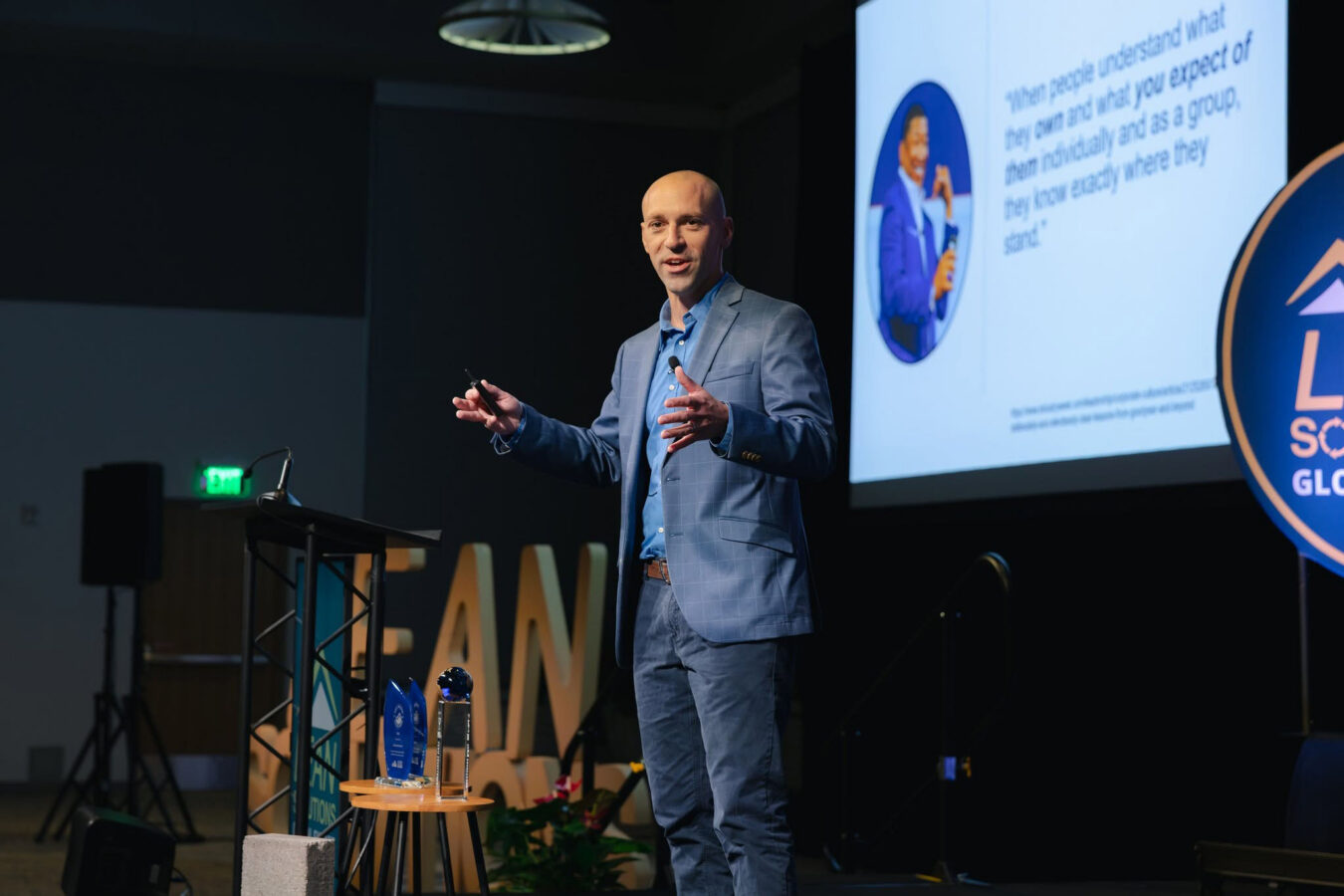
‘Lean’ is often taught as a toolkit for removing waste. At the 2026 LEAN Solutions Summit, DISHER’s Joe Dyer closed the event with a different starting point.
Lean is first a people principle. Respect for the person doing the work, and for the people the work serves, is the foundation that makes every process improvement hold.
Joe delivered the closing keynote at Frederik Meijer Gardens in Grand Rapids, where the summit theme was “Better Together: People + Innovation.”
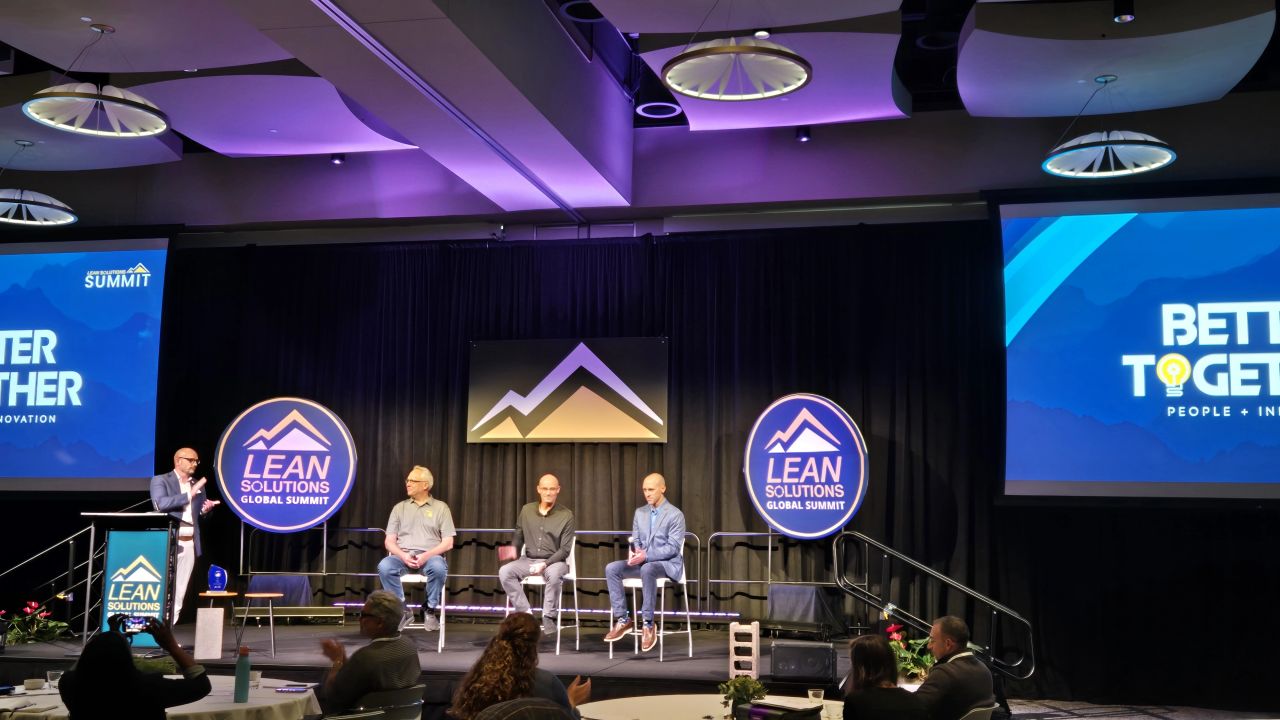
Key takeaways
- Lean begins with respect for people, and process improvement follows from that foundation.
- Curiosity and humility are practical leadership values that keep teams learning.
- Steward leadership means caring for what you do not own and leaving it better than you found it.
- Stewardship is measured by how leaders respond to forces beyond their control.
What does people-centered lean mean?
People-centered lean treats respect for people as the foundation of continuous improvement, not as an add-on to it. Waste reduction, standard work, and flow all matter. They also sit downstream of a more basic commitment to human dignity. A team that honors the people closest to the work gains something no tool can supply on its own: real ownership and better judgment on the floor.
Why do curiosity and humility matter in lean leadership?
Curiosity and humility are the two values DISHER’s engineering team treats as core, and both are practical. Curiosity pushes a leader to ask the next question instead of assuming the problem is already understood. Humility makes room to accept an unexpected answer and adjust course. Teams that lead with curiosity and humility tend to out-learn teams that lead with certainty, which is exactly what continuous improvement requires.
What is steward leadership?
Steward leadership is accountability for protecting and growing something you do not personally own. Joe uses the image of a park ranger, who tends land they do not own and works to leave it better for the people who come next. At DISHER, ownership is shared broadly through an employee stock ownership plan, or ESOP, which makes stewardship concrete. Employees look after the business on behalf of one another.
What happens when the market shifts?
Steward leadership is not a shield against forces outside your control. Joe illustrated this with a story from the tire industry, where a plant was turned around by strong leadership and significant investment and then was slated for closure soon after, for reasons unrelated to the people who did the work. The lesson is about response rather than guarantee. Hard changes arrive. The measure of a leader is how they carry their responsibility when the changes are not theirs to prevent.
Where is DISHER headed in 2027?
DISHER is building its strategy around collaborative projects, with growing momentum in food and beverage and in medical. The lean principles from the summit connect directly to the company’s 2027 goals: reduce waste, and steward what is in front of you. The through-line of the entire conference, respect for people and human dignity, is the same foundation DISHER intends to keep building on.
Written By:

DISHER
Communications Team
DISHER Newsletter
Sign up to receive articles and insights, delivered monthly.
Schedule a no-committment project call
Reach out to discuss your project to find out if DISHER could be a good fit for you.